
Paint & Whine: Friendship, Loss, and the Art We Carry
Ten years ago, I lost one of my best friends to cancer. She would have been forty-five this October.
When she told us she was going into hospice, I wrote something for her — a memory of a small, ordinary evening we spent together long before cancer showed up and ruined everything. She was giving away her possessions at that point, and her painting was the only thing I asked for. It has hung on my office wall ever since, beside my own painting from that night. I see it every day, and I think of her every day.
I never asked her husband whether she was still awake when he read it to her. I think I sent it too late. I think she’d already slipped into a coma. I don’t want confirmation, so I’ve never asked.
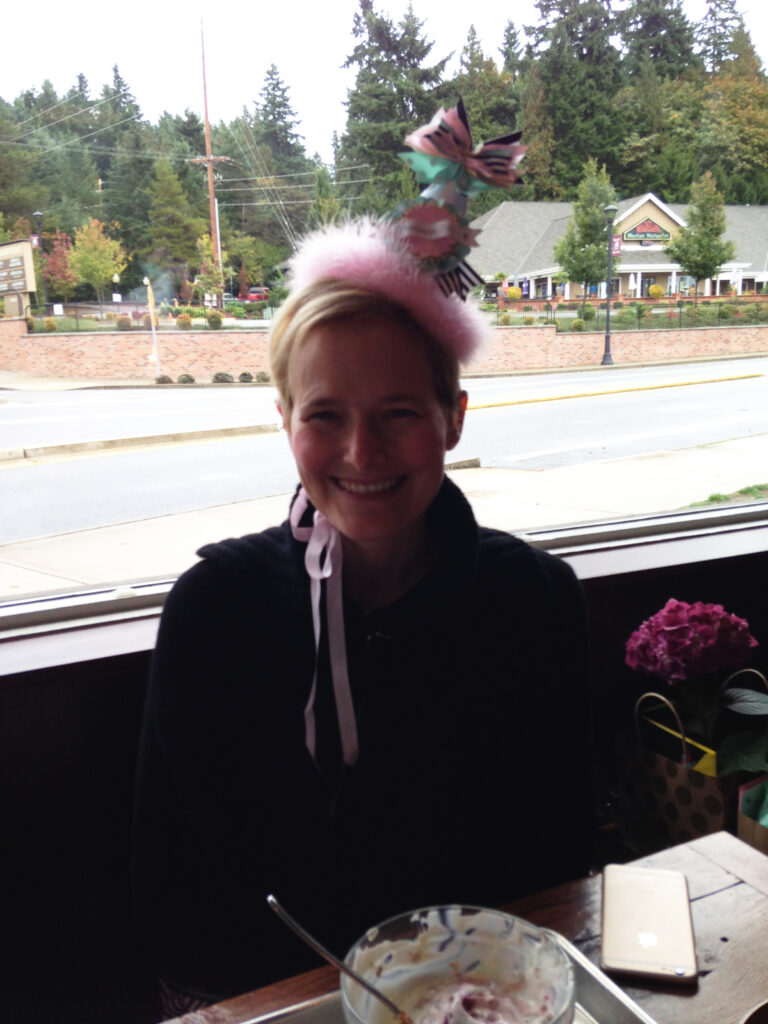
Paint and Whine
I don’t remember whose idea it was — probably one of those group-text moments where enthusiasm outran common sense — but years ago, my besties and I signed up for an evening of painting and wine at a local craft store.
I do remember carpooling with Molly and commiserating the whole way about our deeply questionable artistic abilities. Turns out we were exactly on par with everyone else, especially once the wine kicked in. There were seven of us that night: the four of us, another small group, and the instructor.
On the work tables were random art-supply treasures: paint tubes, business cards, scraps of paper, scissors, blank canvases, and — unexpectedly — a hot plate. We eyed that hot plate with the healthy suspicion normally reserved for mystery leftovers. At some point, true to form, we renamed the event an evening of “paint and whine.”
Our instructor told us to choose colors we liked, squirt them on the canvas, and smear them around with the business cards. No rules, just fun. She may have regretted giving me free rein; I think I used every molecule of gold paint she owned.
Later, she introduced the hot plate. We were supposed to cut little pieces of paper into shapes, paint them, scrunch them in our fists, soak them in water, then set them on the hot plate so they dried in sculptural little curls. After that, we glued them to our canvases.
So we cut and painted and scrunched and sizzled and glued — and we laughed. A lot. I remember Stef wondering aloud why we didn’t do things like this together more often, and right then we resolved that we would.
She suggested trapeze school. We even talked about circus camp at Teatro ZinZanni. We did not, in fact, do either of those things. But we did start monthly family dinners — paella one month, lasagna another, chili after that. Always laughter. Always the feeling of belonging.
Rox, Molly, and I kept our paintings from that night. Stef, the actual artist among us, threw hers out because, “Paint & icing are not my mediums.” So I don’t have Stef’s, but here are the other three:
Molly’s Painting
Molly’s painting hung at the turn of her staircase for years, greeting me every time I climbed toward the playroom to watch our kids or attempt (sometimes successfully) to coax Ben away from marble-based chaos and back home with me.
I’ve had years to think about why her painting feels so perfectly her.
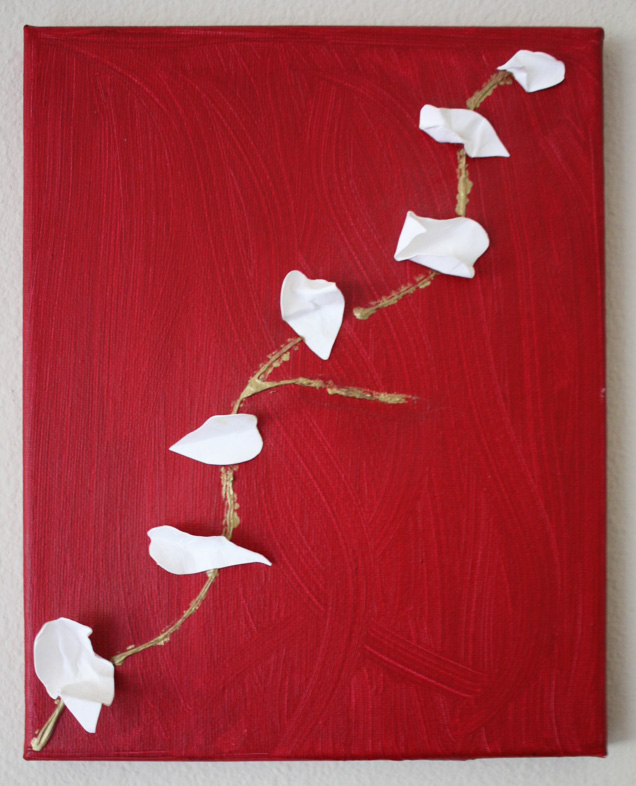
It’s clean and organized and elegant. It reminds me of apple blossoms and kites whipping in the breeze — the feeling of a warm spring day and capri pants worn with white Keds. It’s delicate but grounded, structured without being stiff. It’s metal with a little flex and a little shine — unflappable but warm.
And it’s fun. Just like Molly, who could make me laugh out loud with a two-word text.
My Painting
Mine is… chaotic. Energetic. A swirl of everything all at once, barely contained by the borders. Honestly, it’s extremely on-brand for me.
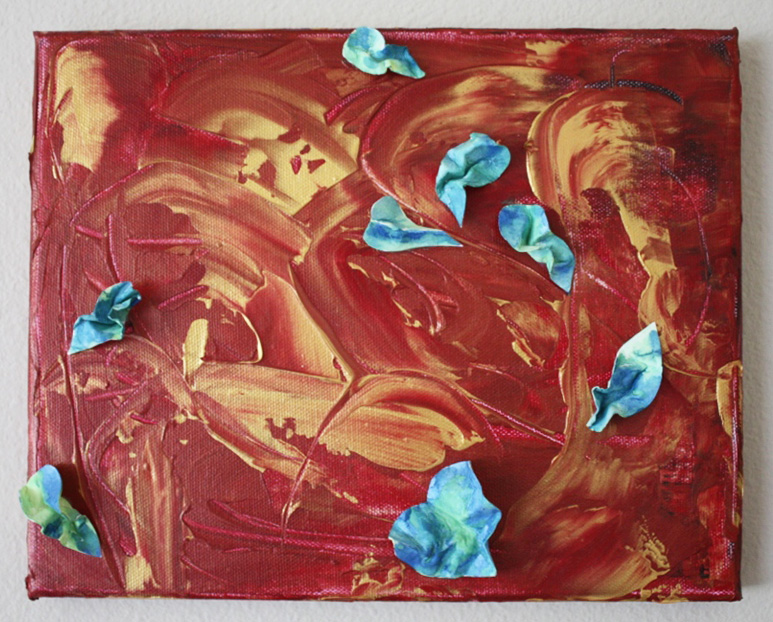
What makes it feel most like me, though, is when it hangs next to Molly’s. Because the two of us have always been a bit of an Odd Couple. She’s Felix to my Oscar. Or maybe she’s J.Crew and I’m Doctor Who. You can’t tell from looking at us, but both of our hearts are bigger on the inside.
Rox’s Painting
Back then, I couldn’t put words to why Rox’s painting looked so much like her.
Rox is glorious intensity wrapped in genuine kindness. When you have her attention, she is all in. She asks questions because she truly wants the answers. She dives in, she fixes things, she shows up, and when she sets her sights on solving a problem, that problem is as good as solved.
Except cancer. I watched her fight it with everything she had. I watched her heart break when she couldn’t protect Molly from the one thing that refused to be fixed. Mine broke too.
Now, looking at her painting — with its streaks of molten red and gold, its sculpted petals climbing upward — I finally see it.
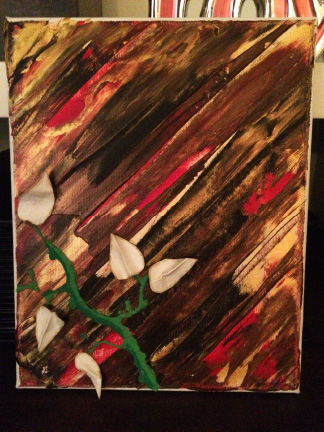
I see the fire she rained down on Molly’s cancer.
I see the intensity of her love.
I see the steady persistence of her kindness.
I see her holding all of us up when everything was falling apart.
She organized meal rotations (long before apps did it). She handled carpools. She researched treatments. She sat beside hospital beds. She was the firefighter walking straight into the burning building — and the rock that stayed planted behind you, steady and immovable.
She was, and is, one of my best friends.
I don’t think I ever said that to her outright after we lost Molly. I should have.
More from Belonging Is Real
How I Fix My Crafting Mistakes (A Warm + Honest Crafting with Chaos Guide)
A gentle look at the messy, funny, very human side of making things — and why mistakes matter.
Belonging Is Real: The Heart Behind My Creative Chaos
A personal essay on creative identity, neurodivergence, and the communities we build.